 Scale Showdown



1 Episode

2 Episode

3 Episode

4 Episode

5 Episode

6 Episode

7 Episode

8 Episode

9 Episode

10 Episode

11 Episode

12 Episode

13 Episode

14 Episode

15 Episode

16 Episode

17 Episode

18 Episode

19 Episode

20 Episode

21 Episode

22 Episode

23 Episode
Story
Sheldon becomes Leonard's teacher in an effort to understand football. He approaches the subject with his usual precision, turning a familiar game into a demanding intellectual exercise. Elsewhere, a kite-flying incident puts Howard and Raj's friendship under strain, and both friends have to deal with the consequences of a seemingly harmless pastime. The episode sets competing ideas about logic, loyalty, and everyday social behavior against each other while keeping the focus on the group's distinctive comic chemistry.
Overview
This episode of The Big Bang Theory belongs to Season 3, which follows Leonard's new romance with Penny and Sheldon's resistance to change. It combines relationship comedy with the series' recurring fascination with the gap between academic knowledge and ordinary experience. Sheldon's attempt to approach football as a subject to be studied creates room for dry observations, misplaced confidence, and escalating confusion. The parallel story involving Howard and Raj explores how quickly a friendship can become complicated when pride and misunderstanding enter the picture.
Set within the ensemble world of physicists, engineers, and their close friends, the episode relies on fast dialogue and contrasting personalities. Sheldon's analytical habits clash with a subject rooted in shared cultural experience, while Howard and Raj face a more personal source of tension. The result is a character-driven comedy built around social awkwardness, intellectual rivalry, and the fragile rules that hold friendships together. At about twenty minutes, it suits a light, easy viewing session.
Cast and Characters
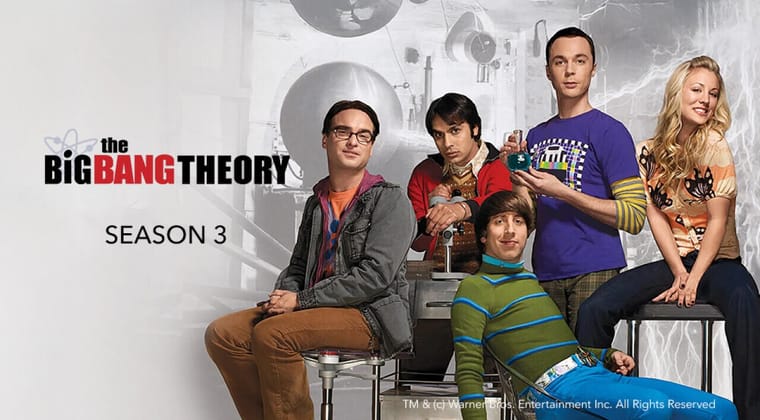
The series stars Johnny Galecki, Jim Parsons, Kaley Cuoco, Simon Helberg, and Kunal Nayyar. The story centers on Leonard, Sheldon, Penny, Howard, and Raj, whose different views of romance, friendship, and everyday life fuel the comedy. Sheldon's role as Leonard's football teacher highlights his confidence and unconventional way of relating to the world. Howard and Raj receive a parallel storyline that puts their friendship under pressure after the kite-flying incident.
The ensemble format gives each principal performer space to contribute to the friction, timing, and conversational energy that define the group.









More like this





























Trailer