
Story
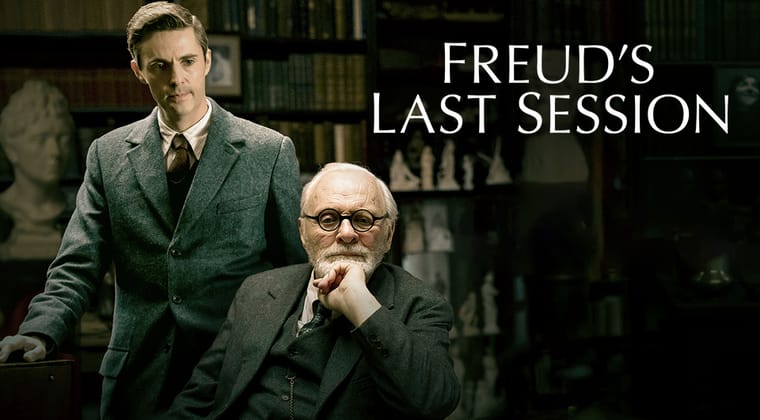
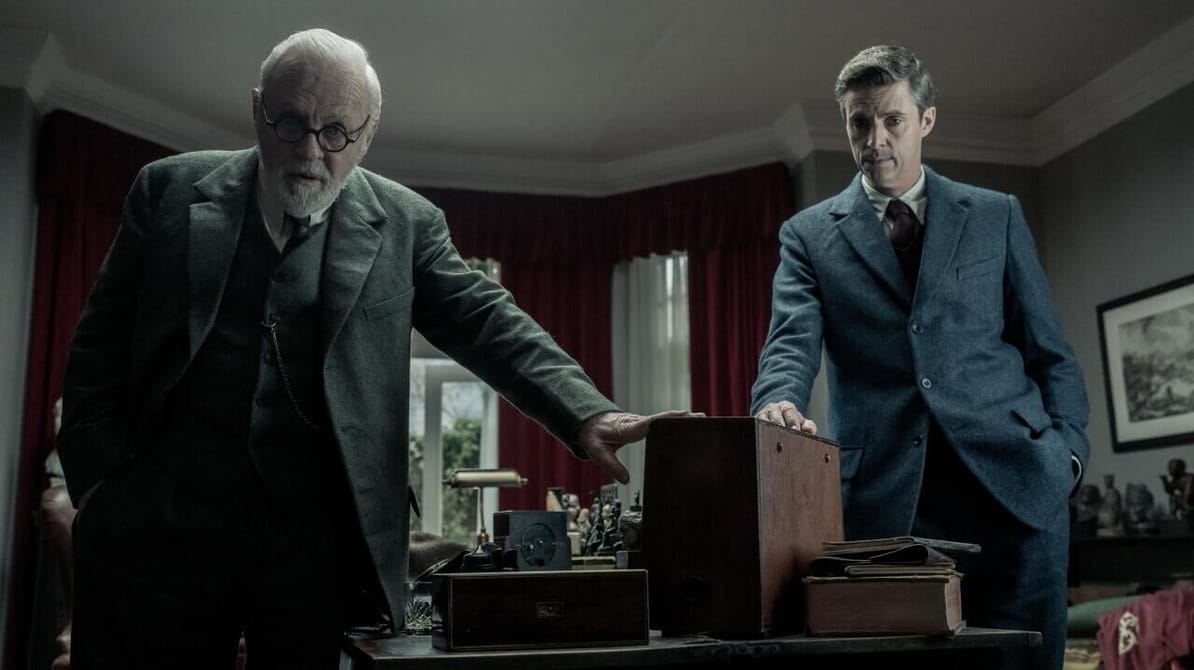
As Europe stands on the brink of the Second World War, Sigmund Freud and C.S. Lewis meet for an intense private exchange about faith, reason, and the existence of God. Their conversation becomes a meeting of sharply contrasting worldviews, shaped by personal history and the uncertainty surrounding them. The film moves beyond Freud’s study, weaving together memories, imagined encounters, and moments from the lives of both men.
Freud's Last Session draws its tension from ideas expressed through character and conversation. Arguments about belief become closely connected to questions of suffering, identity, mortality, and the need to find meaning in a troubled age. The result is an intimate drama with an expansive imaginative dimension.
Overview
Directed by Matt Brown, this American drama places two influential twentieth-century thinkers at the center of a compact, intellectually charged narrative. The setting provides a focused stage for their opposing perspectives, while the film’s shifts between past, present, and fantasy broaden the story into a study of memory and conviction.
The atmosphere combines the restraint of a chamber piece with the movement of a psychological journey. Rather than treating its philosophical subject as an abstract debate, the film connects each argument to the private lives of Freud and Lewis. Their encounter offers a thoughtful portrait of two formidable minds confronting questions that remain deeply personal.
Cast and Characters
Anthony Hopkins and Matthew Goode portray the central figures, Sigmund Freud and C.S. Lewis, whose meeting drives the film’s emotional and intellectual conflict. Their performances anchor the dialogue between skepticism and belief, while the surrounding cast adds further dimension to the lives and memories explored throughout the story.
- Anthony Hopkins
- Matthew Goode
- Stephen Campbell Moore
- Jodi Balfour






More like this
























Trailer